MásGusto
- 4.8
- Rating
- 50.00K
- Installs
- Free
- Price

 Analysis by App-foxy
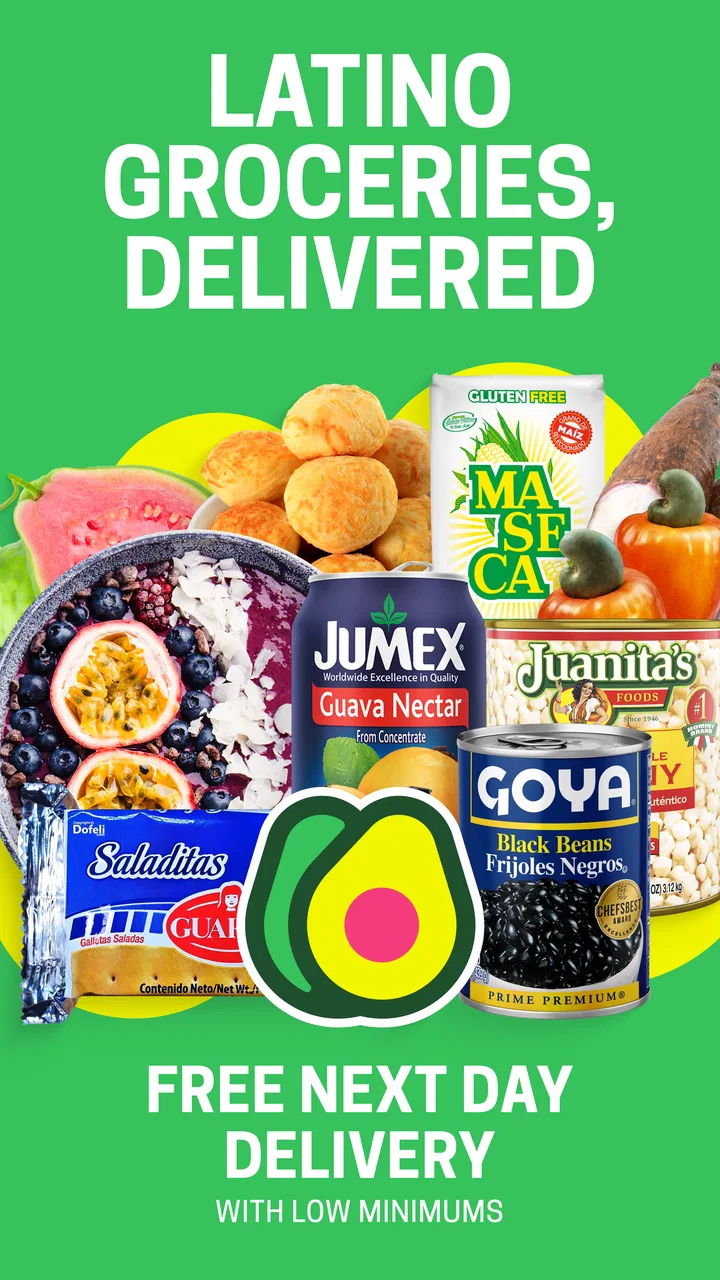
I tried MásGusto as a food and drink delivery app, and my first impression was that it aims to make ordering familiar Latin American and Asian groceries feel less like a general supermarket search and more like a focused food run. The app is developed by Weee! Inc., is free to install, and carries an Everyone age rating. Its store summary presents it as home delivery with more flavor, while the short description simply identifies it as MásGusto. That simplicity is useful: the app’s purpose is easy to understand before you begin.
What matters most to me with a delivery app is not a polished welcome screen but whether it helps me complete a realistic order without unnecessary friction. I looked at MásGusto from that angle: how useful it is for planned shopping, how it compares with ordinary grocery and restaurant delivery services, and whether its free access translates into practical value. My conclusion is positive for shoppers who want culturally specific food choices, although it is not automatically the best option for every kind of order.
How MásGusto fits into everyday food shopping
MásGusto belongs to the Food & Drink category, but I would not think of it only as a restaurant-ordering tool. Its strongest appeal is the idea of bringing more distinctive ingredients and prepared food into the same delivery habit. That makes it potentially useful for someone planning a family meal, restocking pantry items, or looking for products that can be difficult to locate in a nearby mainstream supermarket.
You May Also Like

 AccuWeather: Weather Radar
AccuWeather Review: A Quick, Clear Forecast for Everyday Decisions
For everyday plans, the best forecast is the one you can understand quickly. AccuWeather makes rain timing, radar, and local conditions easy to act on, with a few trade-offs.

 Hill Climb Racing
Why Hill Climb Racing Still Turns Crashes Into One More Run
A tiny car, a bumpy hill and one more upgrade: Hill Climb Racing keeps resurfacing because its simple chaos makes every near-miss feel personal.

 AliExpress - Shopping App
AliExpress Makes Global Shopping Feel Personal, but Shoppers Bear the Risk
AliExpress turns a global marketplace into a pocket-sized discovery engine. Its reach is useful, its shopping loop compelling, and its trade-offs easy to miss.

 Lords Mobile: Kingdom Wars
Lords Mobile Is a Kingdom-Building Routine, Not a Quick Match
A case-by-case verdict on the building, battles, device demands, and social commitments that make Lords Mobile rewarding for some players and exhausting for others.

 PDF Scanner app - TapScanner
TapScanner Makes Paperwork Easier to Capture, Check, and Share
TapScanner makes scanning with a phone feel less like a rescue operation and more like a dependable step in getting work done. Its capture tools are useful, though not flawless.

 Block Blast!
 Shows How Much a Puzzle Game Can Leave Out
A quiet grid game shows why puzzle players increasingly value instant clarity, repeatable skill and low-pressure play—and where the genre still needs to catch up.
More From Our News Desk
View All News


A realistic use case would be a busy weekday evening when I want to prepare a meal with ingredients I already know, but do not have time to visit several shops. Instead of opening a broad marketplace and searching through unrelated listings, I can use a service designed around food discovery and delivery. The benefit is not merely saving a trip; it is reducing the mental work involved in remembering which store usually carries a particular ingredient.
That focus also changes how I judge the app. A general delivery platform may be better when I need a single emergency item, a restaurant meal immediately, or a very broad selection of household goods. MásGusto makes more sense when the order itself is food-led and I care about finding products that reflect particular culinary traditions.
Free access and what that means for value
MásGusto is free, so there is no purchase price for trying the app itself. That is an important advantage because I can explore its usefulness without making a financial commitment before I know whether its selection fits my cooking habits. The free entry point also makes it easier to keep the app available for occasional shopping rather than treating it as a service that must justify a subscription.
Still, free installation should not be confused with a guaranteed low final order total. The app’s price is free as an app, while the cost of food and any order-related charges belongs to the shopping process rather than the download. I would therefore judge value at checkout, not simply from the fact that the app costs nothing to install. For a careful shopper, the sensible routine is to review the basket total and delivery details before confirming an order.
This distinction is especially important when comparing MásGusto with a local store run, a restaurant app, or a general marketplace. A free app can save time and make discovery easier, but convenience is only worthwhile if the completed basket matches what I actually need. I would use the app to compare the practical cost of delivery against the time and transport involved in shopping elsewhere.
What the current release suggests about support
The current version is 26.0, and the app was released on March 6, 2025. It supports devices running Android 6.0 or newer, which gives it a broad compatibility range for Android users with older phones. I appreciate that because food delivery should not require a recent flagship device; the important thing is being able to browse, build an order, and check delivery information reliably.
The app has reached over fifty thousand installs, with an average rating of 4.8 from around eight hundred ratings and more than one hundred reviews. Those figures suggest a strong reception among people who have rated it, but I would treat them as a signal rather than a substitute for checking whether the service suits my location and shopping style. A highly rated app can still be a poor match for someone who wants restaurant-only delivery or a very specific local store.
Where the app creates real value
The clearest value is concentration. Instead of using a broad shopping app where culturally specific ingredients may be mixed into a huge catalogue, MásGusto is positioned around a more flavorful food experience. That can make browsing more purposeful. I am less likely to approach the order as an endless search and more likely to think in terms of a meal, a pantry restock, or a familiar regional product.
A second benefit is convenience for households with recurring food preferences. If I regularly cook dishes that depend on ingredients not carried by nearby chains, delivery can turn a complicated shopping routine into a repeatable one. The useful workflow is to plan several meals before opening the app, search with the exact ingredient in mind, and combine the results into one considered basket rather than placing several small orders.
That planning approach is one of my main practical tips. A delivery service is most valuable when it replaces a trip, not when it encourages frequent impulse orders. I would make a short list first, check whether the basket covers several meals, and only then decide whether delivery is worthwhile. This is particularly helpful for pantry goods, where a planned order can be more efficient than repeatedly looking for one missing item.
Another non-obvious strength is the way a specialized food identity can help with discovery. A general supermarket app tends to organize products by broad departments. MásGusto may be more useful when I begin with a cuisine, ingredient tradition, or family preference rather than a generic category. For someone learning to cook unfamiliar dishes, that context can be more helpful than a massive but impersonal catalogue.
Tradeoffs compared with usual alternatives
My comparison with ordinary alternatives is straightforward. A large supermarket delivery app usually wins on everyday staples, household supplies, and the ability to combine food with non-food purchases. A restaurant delivery app usually wins when the goal is a ready-to-eat meal and speed matters more than pantry shopping. A local store trip wins when I need to inspect freshness, choose substitutions personally, or avoid delivery-related costs.
MásGusto sits between those options. It is more specialized than a supermarket marketplace and potentially more useful for ingredient-led shopping than a restaurant platform. However, that specialization can become a limitation if my basket is mostly milk, cleaning products, toiletries, or other ordinary household items. In that situation, a general grocery service may save me from splitting the order across different places.
I would also avoid assuming that a specialized catalogue removes the need to read product details carefully. Food shopping often involves differences in size, preparation, packaging, and intended use. My practical habit would be to check the item description and quantity before adding it, especially when I am buying an ingredient for a recipe that depends on a particular form. A confident-looking product name is not enough reason to skip that step.
There is a tradeoff between discovery and speed as well. Browsing a focused food app can be enjoyable when I want ideas, but it may feel slower than reordering a familiar basket from a store I already use. If I know exactly what I need and want to finish in a minute, the app that remembers my usual supermarket order may be more efficient. MásGusto earns its place when the food itself is the reason I am shopping.
Small habits that make ordering easier
I would begin by deciding whether the order is for a meal, a pantry refill, or exploration. Mixing all three without a plan can lead to a basket that looks appealing but does not serve a clear purpose. Separating those goals helps me judge whether each item is useful and whether delivery is replacing a meaningful shopping trip.
For meal planning, I would check the full ingredient list before ordering. This avoids the common problem of receiving the central ingredient while discovering later that a supporting item is missing. For pantry restocking, I would group products by how often I use them and avoid buying more simply because browsing makes them easy to find.
I would also use a final basket review as a decision point rather than treating checkout as automatic. The app is free to access, but the order still deserves the same attention I would give a physical shop. I would verify quantities, remove duplicates, and compare the convenience of delivery with the alternative of buying locally. This is a simple habit, but it protects the value proposition better than chasing the lowest-looking item price.
For occasional users, another useful approach is to keep MásGusto as a specialist option rather than replacing every other food app. I can use a supermarket service for routine staples, a restaurant platform for prepared meals, and MásGusto when I want its particular food focus. That combined approach is more realistic than expecting one app to be best at every kind of food purchase.
Who will get the most from it
I think MásGusto is a strong candidate for people who cook food connected to Latin American or Asian tastes, shoppers who have limited access to specialized stores, and families that prefer planning a larger food order instead of making several separate trips. It may also suit curious cooks who want a more focused place to browse ingredients and build meals around them.
The app is especially appealing if delivery saves substantial time. Someone living far from the nearest specialty market may value the service for reasons that have little to do with impulse convenience. The real gain is access combined with a simpler routine. In that situation, the free app makes experimentation low-risk, while the specialized focus can make the search more relevant than a broad marketplace.
I would be more cautious if I mainly order restaurant meals, need non-food products in the same basket, or prefer choosing produce in person. The app may also be a weaker fit for people who already have a nearby store that reliably carries everything they need at a convenient price. In those cases, MásGusto could add an extra step instead of removing one.
It is also not the right choice for anyone who dislikes planning delivery orders. If I want a last-minute item immediately, I would first consider the option with the most predictable local availability. MásGusto’s value is strongest when I have a clear food purpose and enough patience to review the basket rather than treating delivery as a substitute for every spontaneous purchase.
My buying decision after using it
My verdict is to try MásGusto if its food focus matches the way you shop. Because the app itself is free, the barrier to testing it is low, and the high average rating indicates that it has been well received by the people who rated it. I would not install it expecting a universal replacement for supermarket, restaurant, and local-store apps. I would install it as a focused companion for food shopping with a stronger cultural and culinary identity.
The best value comes from using it deliberately: plan a meal or a pantry refill, build a sensible basket, review the final order, and compare delivery convenience with your usual alternative. That approach turns a free download into a useful shopping tool without pretending that free access makes every order automatically economical.
In short, MásGusto is worth trying when specialized food discovery and home delivery solve a real problem for you. I would recommend it to a friend who often searches for distinctive ingredients or wants a simpler way to organize those purchases. I would skip it as a primary app if my needs are mostly ordinary groceries, ready-made restaurant food, or mixed household shopping. Used for the situation it is designed to serve, it offers a convincing and practical reason to keep it on an Android phone.
FAQs for MásGusto
01What is MásGusto, and what features does it offer?
MásGusto is a culinary app designed to enhance your dining experience. It offers features such as personalized recipe recommendations, a meal planner, and a grocery list generator. Users can also access cooking tutorials and connect with a community of food enthusiasts to share tips and experiences.
02Is MásGusto available on both Android and iOS devices?
Yes, MásGusto is available for download on both Android and iOS platforms. You can easily find it on the Google Play Store for Android devices and the Apple App Store for iOS devices, ensuring compatibility with a wide range of smartphones and tablets.
03Does MásGusto require a subscription or any in-app purchases?
MásGusto offers both free and premium versions. The free version provides access to basic features, while the premium version, available through a subscription, unlocks additional features such as exclusive recipes, advanced meal planning tools, and ad-free usage. In-app purchases may include special recipe packs or cooking courses.
04How user-friendly is the MásGusto app for beginners?
MásGusto is designed with user-friendliness in mind, making it accessible for beginners. The intuitive interface guides users through the app with easy-to-follow instructions and clear navigation. Additionally, the app offers tutorials and tips for those new to cooking, ensuring a smooth learning curve.
05Can I use MásGusto offline, and how does it handle data usage?
MásGusto offers some offline capabilities, such as access to saved recipes and shopping lists. However, features like community interactions and content updates require an internet connection. The app is optimized to minimize data usage, but users can manage settings to control data consumption according to their preferences.
Pros
- User-friendly interface with intuitive navigation.
- Wide variety of recipes from different cuisines.
- Detailed step-by-step cooking instructions.
- Option to save favorite recipes for quick access.
- Regular updates with new recipes and features.
Cons
- Requires internet connection for full functionality.
- Limited offline access to saved recipes.
- Some features locked behind a paywall.
- Occasional ads can disrupt the experience.
- No option for personalized dietary restrictions.

MásGusto
Gallery